Search
Search
1448 results were found.
3. Unexpected rain during reconstruction of shingle roof – what to do?
When you are renovating the roof of an occupied house, you need to be prepared for a sudden change of weather like a storm or rain. If the rain water leaks inside the house, the plasterboard ceiling or the insulation can be badly damaged. Roofing contractors are very often insured against these risks but it’s better to prevent any potential damage than to solve the problems. Renovating a large roof can take up to several days, and sometimes it might be quite difficult to wait for several days of good weather in a row. That’s why it is a good idea to open only a small part or one side of the roof, so it can be easily protected against the rain. If you remove an old roof covering and the wooden deck is exposed, you should always try to finish this part of the job as soon as possible and cover the wooden deck with an underlayment.

The underlayment is a crucial part of the roof build-up.
It prevents leakage into the house and protects the wooden deck (OSB or planks) from getting wet. A wet wooden deck can twist and deform the roof structure when it dries, causing shingles to buckle. Therefore we suggest temporarily covering the roof with a tarp when it suddenly starts to rain if the deck is not covered with an underlayment. Tarps must be laid in such a way that the water runs down from the top to the bottom without the risk of infiltrating the uncovered roof. Load the tarp with some weights. Some tarps have circle openings at the edges where you can hang the weights (e.g. filled PET bottles). Shingle bundles can be placed on the sides of the tarp to protect the tarp against the wind lift ups. Alternatively you can hammer battens on the lower edges of the roof and load them with bundles. It will function as a weight and will prevent the tarp from lifting up. As soon as the rain stops, remove the tarp and let wet parts of the wooden deck dry for a while and afterwards you can start installing the underlay.

4. Should I protect the roof when it’s only covered with an underlayment?
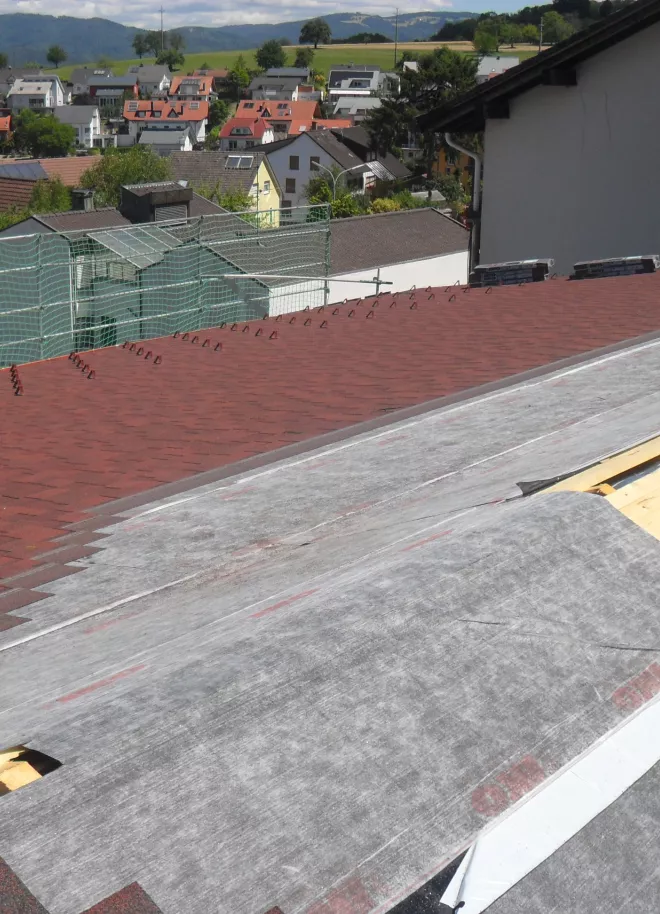
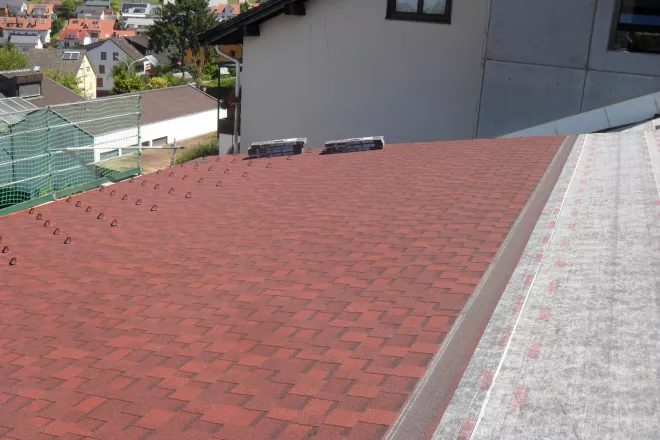
A roof side covered with an underlayment no longer needs protection against the rain. The underlayment will protect the roof deck prior to installing shingles. However it is always better to install the shingles over the IKO underlayment as soon as possible. Don’t leave the underlayment uncovered on the roof for more than 3 weeks. The top non-woven fabric is not UV resistant and can peel off by exposure to the sun. This peeled-off fabric doesn’t influence the water tightness of the membrane, but it’s not aesthetically nice. If the top of the underlay is wet due to the rain, we recommend waiting a while, so the moisture can evaporate. Trapped moisture can cause some hidden defects on the material such as buckling or wrinkling and can also lift the shingles etc. Of course if you covered your underlayment with a tarp while it is raining, you can continue with the installation of shingles immediately after the rain and you don’t have to wait for the fabric to dry.

5. Should I protect unpacked bundles from the rain?
Shingles on the roof will be exposed to all extreme weather conditions. Therefore there is no need to protect them from the rain if they are still in packages. However we recommend protecting the bundles from direct sunlight to prevent shingles sticking together in their packaging. Also do not pile up shingles on top of each other to avoid any likely damage. Make sure the shingles are dry before you install them so they will stick to the roof surface immediately after the installation. If the shingles are wet, let them dry before the installation.

6. Sudden rain and shingles installation of a new roof – what can you do?
When you are building a new two-layered shell roof structure, a breathable membrane must be installed over the rafters. That way the roof structure, insulation and drywalls are all protected against water penetration. For a shingle roof, a wooden deck is installed on the top of rafters. Since the wooden deck made of OSB or wooden boards needs to stay dry, it is necessary to immediately install the underlayment to avoid any buckling problems. If you don’t have the time to do this, you must cover the surface with a watertight tarp.

7. Sudden rain when installing a pergola, garden house or garage – what can you do?
When it rains during the installation of shingles on small roofs, you have to follow the same procedure as the larger roofs. So in case of rain, temporary protect the roof. These roofs are often less complicated and therefore easier to protect. Just tight a tarp over the roof so wind doesn’t blow water under it. Once the rain has passed and the wooden deck is dry, you can continue with the installation.
8. What tarp to use?
Tarps or tarpaulins are made from plastic. They are waterproof and sold in various sizes. They have ring openings around their perimeter for fixing ropes or weights. You can buy them online or at any hobby market or hardware store.
And to finalize, here are some extra tips on how to be prepared during seasons of rain and storm:
- Choose the right tarp - Don’t try to save money on the quality of the tarp. The tarp should be durable, waterproofed and UV resistant for a long time.
- Think about tarp size - This depends on the area of the exposed roof in need of protection. The tarp must be oversized to account the overlap on the sides and edges of the roof deck. Two or three tarps may be required.
- Be prepared, have a stock of wooden battens, screws, a screw-gun and some weights - For weight, you can use full unpacked bundles.
- Install the tarp - Secure one side first and make sure the tarp is the right side up. Pull tight and remove all wrinkles. Then put bundles on the ends and secure them with battens and screws.
- Silver heavy-duty duct tape - If the tarp gets punctured in some way you can tape it on the underside.
- Cover the underlayment with the tarp - When you leave the job, cover your underlay with a tarp to protect it against moisture. Next morning you can start installing shingles on a dry underlay without any wrinkles.