
Search
Search
1448 results were found.
Roof replacement is the process of installing a completely new roof that includes tear off of the old one. Roofers will tear everything off, down to the deck of the roof, and basically start from scratch with the new roof, from putting an underlay e.g. Armourbase Pro Plus and then installing shingles.
The replacement of roof involves much more time and labor which is more expensive than reroofing. When a roof doesn’t have underlying problems is an old and simply losing its function, reroofing might be a better solution as it involves much less work on your home, as well as less money

When is it better to put a new roof over an existing roof
When your roof starts to fail, but it is in an overall good condition, a reroofing might be the best choice for you. It means that your roof may be at the end of its life, but its underlying structures and wooden deck are in a generally good condition. Your shingles may be losing granules and are worn out due to age or weather, but they are not causing leaks, they are not curling or missing. These are all good predispositions for installing a new layer of shingles over the existing one.
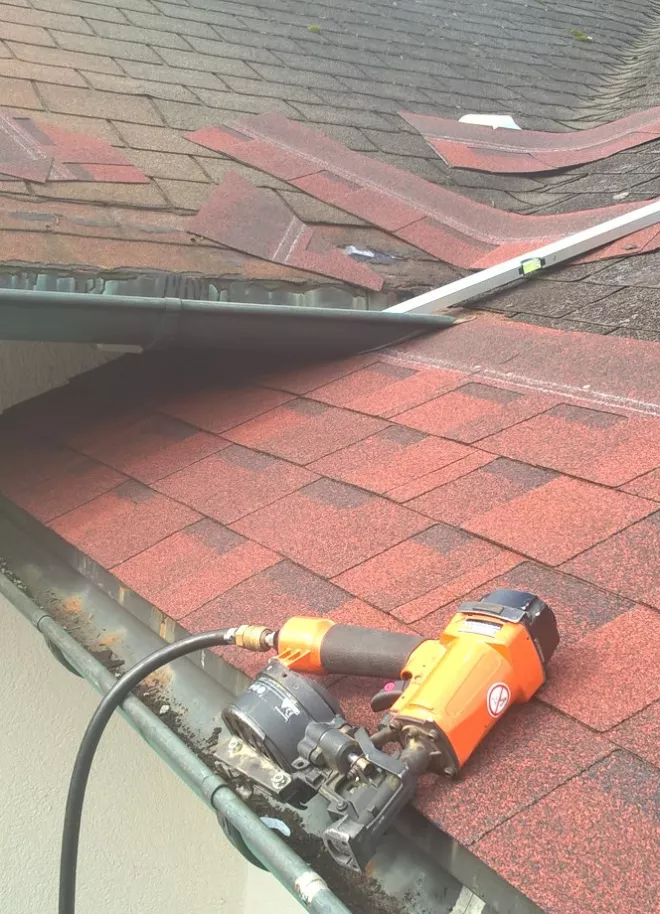
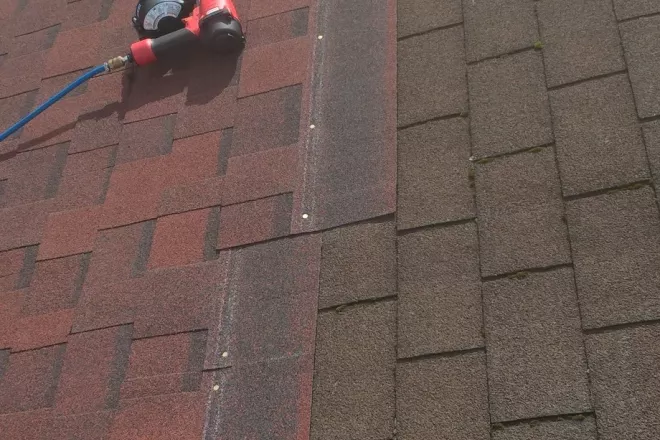
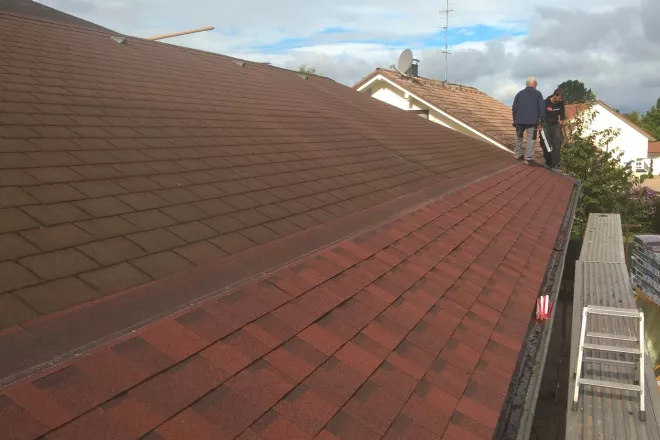
Reroofing can also be done when you simply want or need a change on your roof. If you want a different design or color, or you may be completely renovating your home so you want the roof to match your new style. Installing a new shingle layer will give your roof depth and even a three-dimensional appearance, as it is slightly raised due to the existing layer of shingles beneath it. The best IKO shingle for this is the Cambridge Xtreme 9,5° or Cambridge Xpress.
When it comes to the financial aspect of reroofing, it is undoubtedly less expensive than a complete roof replacement. The main reason for that is that there is no need for a tear off of the old roof – of the existing shingles and the underlying structures. This means that there is significantly less labor needed, as well as time spent on the project, and therefore the costs are lower. Your roofer can immediately start with the installation of the new roof, without spending time on shingle removal and disposal.
When is it not recommended to do reroofing
Every professional roofer after roof inspection will come to you with his report or a recommendation, explaining why your roof is or isn’t for reroofing. You can ask for a few roof estimates from different contractors just to be sure that you are doing the right thing, so that you can choose the best roofer for yourself. One of the main and most straightforward reasons is curling shingles, as you can only install a new layer if an old shingle roof is completely flat and level. Second reason can be an existing damage of wooden structure underneath, such as rot or sagging.


Step by step application of reroofing
Renovations of old, worn out shingle roofs are mostly simple and inexpensive jobs when using IKO bitumen roof shingles in combination with the best techniques. The material cost is not the main cost; Stripping off the roof shingles, disposal and labor are even more significant costs! Before starting off any project, first check out whether the existing roof shingle layer could remain in place or has to be removed. Depending on local building codes at least three layers of roof shingles can be applied before stripping off the roof shingles is necessary.
Even more important are:
- The condition of the existing roof structure must be strong enough to support the additional load of the roof shingles.
- Overall appearance must be flat, if sagging is visible, there might be structural problems needing to be fixed.
- Split and nail flat all buckled, raised tabs and curling roof shingles.
- Nail warped decking material if necessary.
- The fastening anchorage for the nails in the new roof shingle layer must be tested.
- The existing surface has to be reasonably smooth.
- In general even roof shingles, not completely worn out, can be shingled over.
- Replace missing roof shingles or shingle tabs and nail down accidentally curled roof shingle edges.
- If necessary, replace rotten wood trim or worn out chimney and rake flashings or to add eaves flashing.
- Uniform and straight edge of drip edge help prevent water seepage under the old roof shingle edges.
- Additional ventilation should be added.
Before & after: Reroofing over existing roof with Cambridge Xpress 53

