
Search
Search
1448 results were found.
Xtreme roof slope = 9,5° (!) right up to 90°
Until a while ago, roof shingles have only been recommended for roof slopes between a minimum of 15° and a maximum of 85°. Cambridge Xtreme 9.5° easily exceeds this minimum roof slope by more than an impressive 35%! Unlike other roofing materials, often limited to a minimum slope of 15°, Cambridge Xtreme 9.5° can be installed on roofs of 9,5° (!). As for the maximum slope, this top of the range self-adhesive shingle can even be applied on vertical walls! So Cambridge Xtreme 9.5° opens up a whole new universe of possibilities on sloped roofs: from as low as 9,5° (!) right up to 90°. No more limits for your architectural building projects!


Calculate how many shingles and accessories you need for your next project!
Suitable for all roof shapes
This wide reach of roof slope also means that a lot of different roof shapes can be covered with Cambridge Xtreme 9.5°: from a simple gable roof to a classy mansard roof, from a gabel roof to a curved turret, from a dormer roof to a façade. Thanks to its maximum slope of 90°, you can even cover a wall with Cambridge Xtreme 9.5°, resulting in a unique style for your contemporary building project.
Impressive resistance to wind driven rain
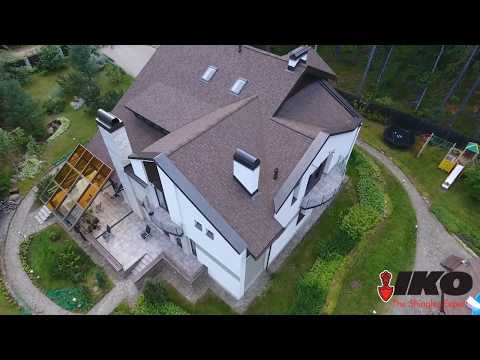
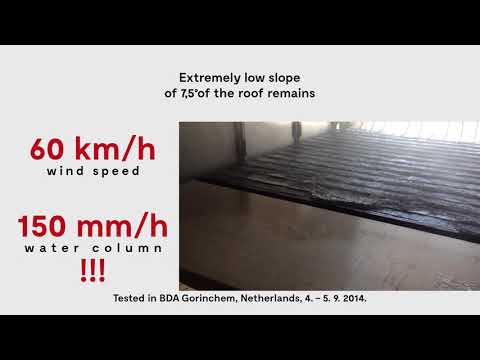
Thanks to its self - adhesive character, this strong and durable dimensional shingle withstands the most severe wind driven rain. Cambridge Xtreme 9.5° was tested by the KIWA-BDA Institute Netherlands and exceeds the CEN/TR 15601:2012 norm. This norm stipulates a resistance to wind blowing at 47 km/h and rain falling with 89 mm/h. This is an extreme situation that occurs only once per 50 years in Europe (according to the BRE Institute). Cambridge Xtreme 9.5° even registered a perfect resistance to winds blowing at 61 km/h and rain falling with 120 mm/h. Safe to say that Cambridge Xtreme is the safe roofing choice when it comes to extreme weather situations.

Cambridge Xtreme 9,5° is the safest solution for any building project! This impressive resistance and extreme slope aren’t the only reason why Cambridge Xtreme 9,5° is the best option for your building project. The bigger size of shingle (comparable with Cambridge Xpress) contributes to a fast installation and with its 7 natural colours it fits every roof style.
Your advantage with this exceptional Cambridge Xtreme 9.5° roof shingle:
- Xtreme slope: ≥ 9,5° (!) / ≤ 90°
- Xtreme resistance to high wind & heavy rain - No other shingle offers better resistance to wind driven rain in extreme weather conditions (storm, hail). Tested and approved in KIWA-BDA Institute Netherlands 2014
- Xtreme unique: the world’s first self-adhesive laminated shingle
Will IKO Cambridge Xtreme 9,5° resist wind driven rain?
Discover in this film how well Cambridge Xtreme 9,5° can resist high winds and rain at the same time (Wind driven rain test).
Additional Wind Tunnel Test (without winddriven rain)
This video shows you the self-adhesive, high quality roof shingle during two impressive tests in a windtunnel.
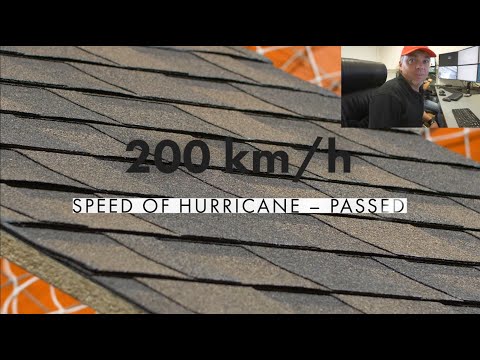
- A normal roof slope of 25° easily resists high speed winds of 200km/h.
- An Xtreme low slope of 9,5° also passed the test. The maximum wind speed of the turbine (216 km/h) could not blow away Cambridge Xtreme 9,5° roof shingles.
Application instructions:
Easy application (for professional roofers):
- Base is a wooden or concrete underdeck construction with a waterproof IKO underlayment.
- Apply roof shingles with IKO nails.
- You would need +/- 35 pc/m². Valley, hips and ridges are easy to install without purchasing a huge range of extra accessories.
- Use Superglass 3TAB shingles to cover hips and ridges.
- Foresee solid insulation and also good ventilation for an optimal and long-lasting roof - improving heating and cooling costs.
Eaves, rakes, walls, chimneys, roof windows, etc. require metal flashings.
Cambridge Xpress = the biggest laminated architectural shingle
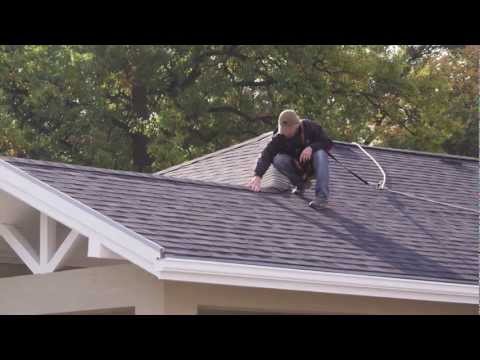
Not to bother you with too much technical details, but the average laminated or architectural roof shingle offered on the market measures 1000 x 336 mm. With Cambridge Xpress IKO Shingles offers a laminated shingle with dimensions 1038 x 349 mm. This larger shingle size is more efficient as it means more coverage on your roof in faster time. Good news for roofers! Our Canadian IKO colleagues proved in a clear movie how easy and fast the shingles application becomes when using this larger IKO laminated architectural shingle.
